
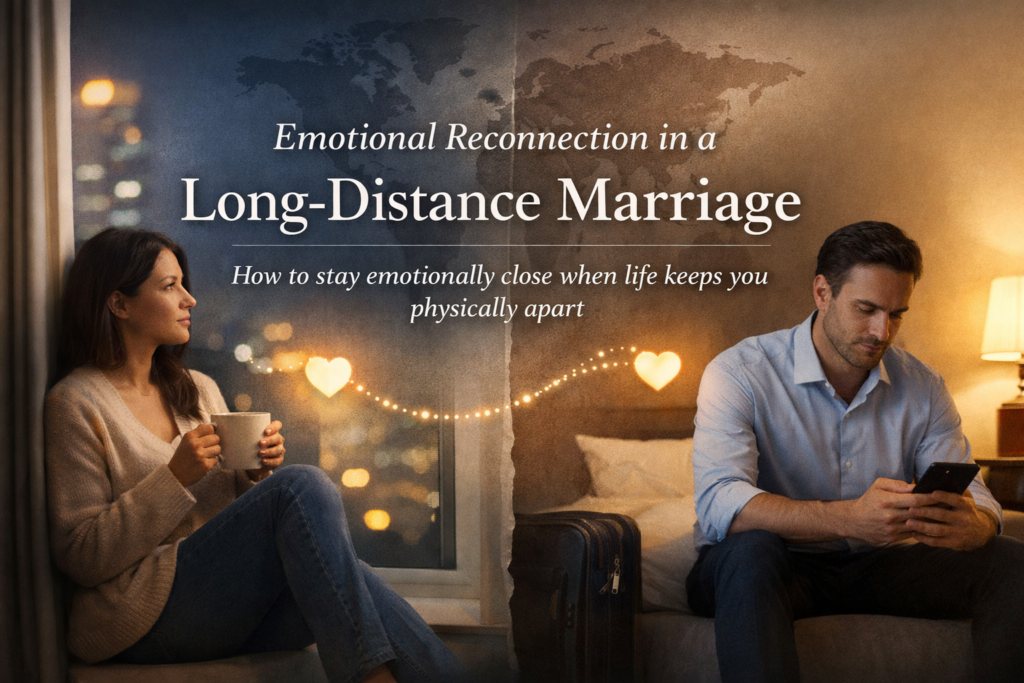
How to stay emotionally close when life keeps you physically apart
Emotional reconnection in long-distance marriage is one of the most overlooked challenges couples face today. When physical distance becomes a necessity due to career, health, or family responsibilities, emotional distance can quietly creep in often showing up as irritation, misunderstandings, or emotional loneliness despite deep love.
Emotional reconnection is not about “fixing” the relationship. It’s about understanding what the distance is stirring inside you and responding with intention rather than reaction.
Why Emotional Reconnection in Long-Distance Marriage Is So Difficult
Physical separation is visible. Emotional distance is subtle.
In many long-distance marriages:
- Conversations become functional (“Did you eat?”, “What’s the plan tomorrow?”)
- Time together is limited and rushed
- Emotional needs remain unspoken
- Stress from external responsibilities spills into the relationship
Over time, frustration replaces softness not because love is gone, but because emotional nourishment is missing.
Anger Is Often a Mask for Unmet Needs
One of the most misunderstood emotions in long-distance relationships is anger.
Anger often shows up when:
- You miss your partner but don’t know how to express it
- You feel emotionally alone during a difficult phase
- You want reassurance but don’t want to seem “needy”
- You accept the situation logically but struggle emotionally
Anger is rarely the core issue.
Unmet emotional needs are.
Practical Steps for Emotional Reconnection in Long-Distance Marriage
Many couples jump straight to communication techniques. While skills matter, emotional reconnection begins earlier—with self-awareness.
Ask yourself:
- What am I actually longing for in this phase?
- What emotion shows up before irritation?
- What do I expect my partner to “just understand” without saying?
When you understand your inner landscape, conversations shift from blame to clarity.
Quality of Connection Matters More Than Quantity of Time
In long-distance marriages, it’s easy to believe:
“If we had more time, things would be better.”
But emotional closeness is less about duration and more about presence.
A 10-minute conversation can feel nourishing if it includes:
- Curiosity instead of urgency
- Emotional sharing, not just updates
- Feeling heard, not just informed
Reconnection happens when both partners feel emotionally seen, even briefly.
Let Go of the Idea of “Normal” Marriage
Long-distance marriages don’t follow traditional scripts and that’s okay.
Trying to measure your relationship against conventional expectations often creates guilt and disappointment. Instead:
- Accept that this phase is different, not deficient
- Focus on what connection looks like now, not what it used to be
- Allow the relationship to evolve with circumstances
Flexibility is a form of emotional strength.
Reconnection Is an Inside-Out Process
True emotional reconnection doesn’t start with changing your partner’s behavior. It starts with:
- Regulating your own emotional responses
- Naming your needs honestly
- Choosing vulnerability over silent resentment
- Responding instead of reacting
When one person shifts their inner stance, the relationship dynamic begins to change naturally.
When to Seek Support
If distance is turning into chronic conflict, numbness, or constant resentment, support can help not because the relationship is failing, but because you’re navigating a complex life phase.
Relationship coaching provides a safe space to:
- Understand emotional patterns
- Reconnect with your needs and boundaries
- Learn how to express yourself without blame
- Strengthen the relationship without pressure or ultimatums
Final Thoughts
Long-distance marriage tests patience, emotional maturity, and self-awareness but it can also deepen connection when handled consciously.
Emotional reconnection isn’t about more effort.
It’s about more presence, clarity, and compassion, starting with yourself.
Distance doesn’t end relationships.
Unspoken emotions do.
If you’re navigating emotional distance in your marriage and want clarity without judgment or pressure, relationship coaching can help you reconnect, first with yourself, and then with your partner.